
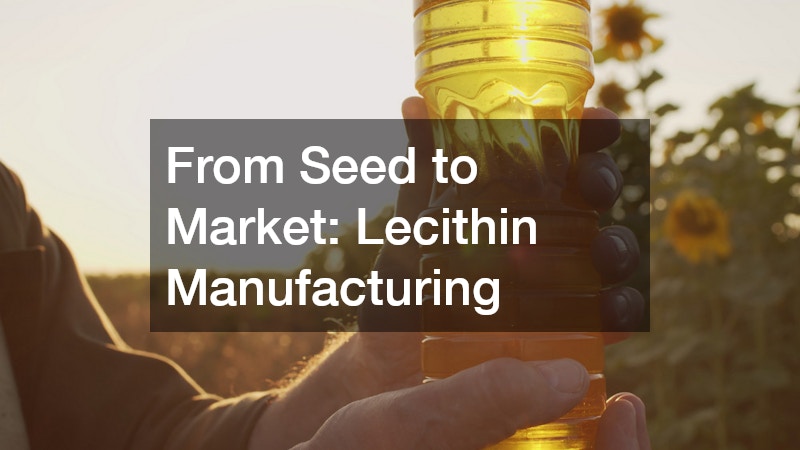
Lecithin manufacturing is a complex process that transforms oil-rich seeds into a versatile ingredient used across food, pharmaceutical, and industrial markets. Understanding how lecithin is extracted, refined, and applied helps manufacturers maintain quality while giving consumers insight into everyday products. From seed selection to sustainability challenges, lecithin’s journey reflects innovation, precision, and growing global demand.
How Is Lecithin Extracted from Seeds?
The Extraction Process
Lecithin is extracted from oilseeds using specialized techniques that separate phospholipids from crude oil. Solvent extraction remains the most common method, typically using food-grade solvents such as ethanol, which allows lecithin to be isolated while preserving its functional properties.
Technological advancements have introduced enzymatic and supercritical fluid extraction, offering improved yields and lower environmental impact. These modern methods enhance purity and consistency while reducing solvent use. The choice of extraction technique depends on seed type, production scale, and intended application.
Older extraction processes often relied on high temperatures that could degrade lecithin quality. Today, manufacturers emphasize controlled conditions and continuous innovation to improve efficiency, minimize waste, and maintain product integrity.
Types of Seeds Used
Soybeans are the most widely used source of lecithin due to their high phospholipid content, global availability, and cost efficiency. Soy lecithin dominates the market, particularly in food and industrial applications.
Sunflower lecithin has gained popularity as a non-GMO and allergen-friendly alternative. Rapeseed and corn are also used, though less frequently, due to lower yields or regional constraints. Each seed source offers unique advantages that influence manufacturing decisions.
Diversifying seed sources helps stabilize supply chains and meet shifting consumer preferences. As demand for clean-label and sustainable products increases, alternative seed options continue to grow in importance.
Ensuring Purity and Quality
Quality control is essential in lecithin manufacturing, as purity directly affects performance across applications. After extraction, lecithin undergoes purification to remove residual solvents and impurities.
Manufacturers comply with strict regulatory and industry standards, supported by laboratory testing methods such as high-performance liquid chromatography (HPLC). Quality assurance teams ensure consistency, safety, and compliance throughout production.
Rising consumer awareness has encouraged investment in cleaner technologies and sustainable practices, improving product quality while supporting environmental responsibility.
What Are the Main Uses of Lecithin?
Culinary Applications
Lecithin is widely valued in food production for its emulsifying properties, allowing oil and water to blend smoothly. It enhances texture, stability, and shelf life in products such as chocolate, baked goods, ice cream, and sauces.
Bakers use lecithin to improve dough elasticity and volume, while manufacturers rely on it to reduce the need for synthetic additives. Its natural origin makes it appealing for clean-label formulations.
Lecithin also supports the growth of plant-based foods by helping create dairy-free spreads, creamers, and meat alternatives, reinforcing its role in modern food innovation.
Pharmaceutical and Nutraceutical Uses
In pharmaceuticals, lecithin acts as an emulsifier and carrier for fat-soluble drugs, improving absorption and stability. Its biocompatibility makes it suitable for intravenous lipid emulsions and controlled-release formulations.
Nutraceutical products often include lecithin for its perceived benefits to cognitive health, liver function, and cellular support. These qualities drive its use in dietary supplements and functional foods.
Ongoing research continues to explore lecithin’s therapeutic potential, expanding its presence in health-focused markets.
Industrial Applications
Lecithin is also used in cosmetics, where it functions as an emulsifier and moisturizing agent in creams and lotions. Its stabilizing properties enhance texture and product performance.
In industrial sectors, lecithin serves as a lubricant and dispersant in applications such as biofuels and coatings. These uses support efficiency while contributing to more sustainable formulations.
What Challenges Are Faced in Lecithin Production?
Environmental Impact
Lecithin production presents environmental challenges due to solvent use and energy consumption. To address this, manufacturers are adopting greener extraction methods, waste-reduction strategies, and renewable energy sources.
Solvent-free and low-impact technologies are gaining traction, aligning lecithin manufacturing with global sustainability goals.
Market Demand and Supply Chain Issues
Demand for lecithin fluctuates with health trends, dietary preferences, and crop availability. Heavy reliance on specific seeds, such as soybeans, can strain supply chains during shortages or trade disruptions.
Manufacturers mitigate risk by diversifying sourcing, strengthening logistics networks, and forming strategic partnerships to stabilize supply and pricing.
Technological and Innovation Barriers
Advanced extraction technologies require significant investment and skilled labor, which can limit adoption. However, automation and digital process control are improving efficiency and competitiveness.
Lecithin manufacturing is a carefully managed process that transforms seeds into a vital ingredient across multiple industries. By prioritizing innovation, sustainability, and quality control, manufacturers can meet growing global demand while delivering reliable, high-performance products to the market.